Proudly serving Tucson, Oro Valley, Marana, Vail, Sahuarita, Green Valley & surrounding areasCall or Text 24/7: +1 (520) 567-9887

Patio Floor Coatings and UV-Stable Outdoor Concrete Protection in Tucson, AZ

Tucson Epoxy Co. installs patio floor coatings for homes and businesses across Tucson and the greater Pima County area. Our outdoor systems pair epoxy base layers with UV-stable polyaspartic or polyurethane topcoats, with flake and metallic finishes available for different looks and uses. We also coat pool decks and garage floors and repair or resurface damaged concrete before coating when the slab requires it. Every recommendation starts with the slab's condition, sun exposure, traffic, and desired finish.

Tucson patios face summer highs that regularly reach 105-110°F, wide daily temperature swings, intense high-desert UV, and fast monsoon downpours from July through September. Those conditions can accelerate dusting, pitting, spalling, hairline cracking, fading, and moisture intrusion on bare or poorly coated concrete. We mechanically profile the slab by diamond grinding or shot-blasting, then check moisture and adhesion before the primer is applied. That preparation helps the finished system bond to sound concrete instead of relying on a surface-only acid etch.

Our crews use two-component epoxy resins and aliphatic polyaspartic topcoats, with surface preparation aligned to International Concrete Repair Institute guidance and moisture and adhesion checks consistent with ASTM methods.

Tucson Epoxy Co. provides patio floor coatings from Tucson to Oro Valley, Marana, Sahuarita, Vail, and the greater Pima County area.

★ ★ ★ ★ ★4.9/5 Average Rating · 20+ Years of Experience · Thousands of Customers Helped · Licensed & Insured · Residential & Commercial

Patio Coating Options & Benefits

What Are Patio Floor Coatings?

A patio floor coating is a fluid-applied resin system engineered to bond to concrete rather than sit on the surface like cosmetic paint. The finished layers create a seamless surface that sheds water, oil, and monsoon runoff.

Outdoor systems commonly use a hard-wearing epoxy base beneath a UV-stable polyaspartic or polyurethane finish. Mechanical profiling opens the concrete pores so the primer and base coat can develop a stronger anchor.

The right build depends on slab condition, direct-sun exposure, traffic, wet-use areas, and the finish you want. Sound concrete may be ready for coating after preparation, while significant pitting, cracks, or deterioration may require repair or cementitious resurfacing first.

Benefits of Patio Floor Coatings

At Tucson's roughly 2,400-foot elevation, strong solar exposure, aridity, and seasonal rain all influence coating selection. A properly prepared outdoor system can protect the slab while giving the patio a finish suited to its use.

  • UV-stable topcoats resist yellowing and color fade
  • Seamless finishes help shed monsoon runoff
  • Epoxy base layers provide chemical resistance
  • Anti-slip additives add texture for wet-foot areas
  • Flake blends conceal minor surface imperfections
  • Metallic pigments create marbled decorative effects
  • Polyaspartic chemistry supports faster return to use
  • A sealed surface is easier to clean than bare, dusting concrete
Patio Coating Services

Patio Floor Coating Services

We prepare and coat outdoor living surfaces, wet-use areas, garages, and business floors, with concrete repair incorporated when the substrate needs more than a finish layer. Each service is scoped around the surface condition and the demands placed on the floor.

Patio Floor Coatings

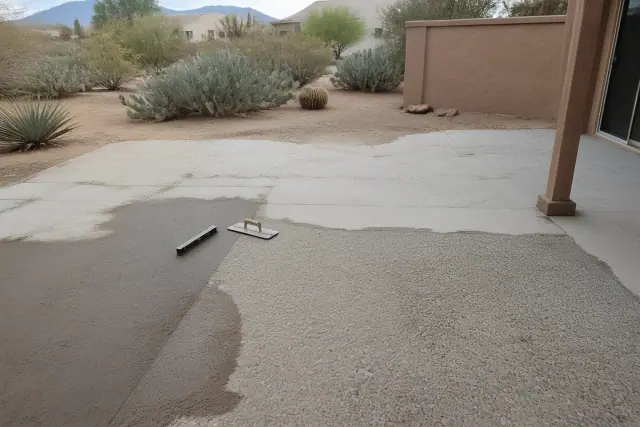
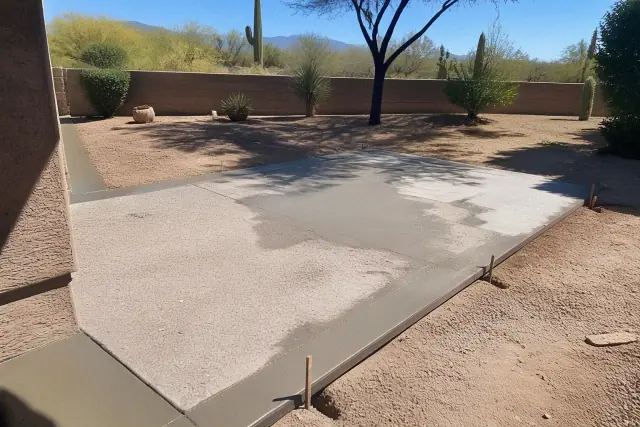
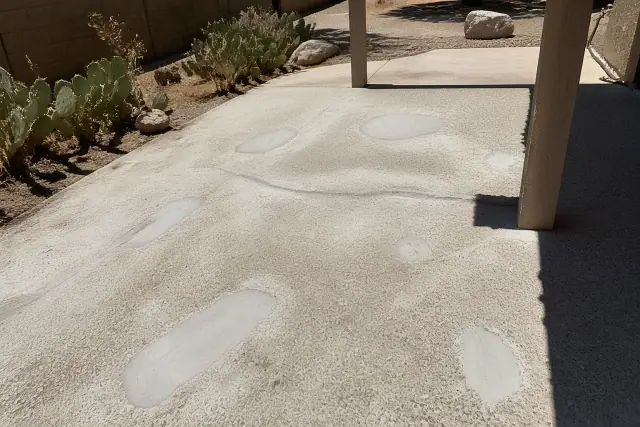
Concrete patio undergoing surface leveling and repair in a Tucson, AZ backyard with prickly pear cacti.

Outdoor patio systems combine mechanical surface preparation, a bonded resin base, and a sun-stable finish selected for uncovered or shaded spaces. Solid colors, decorative flake, and metallic effects provide practical and visual options for backyard slabs and courtyards.

Request Estimate

Pool Deck Coatings

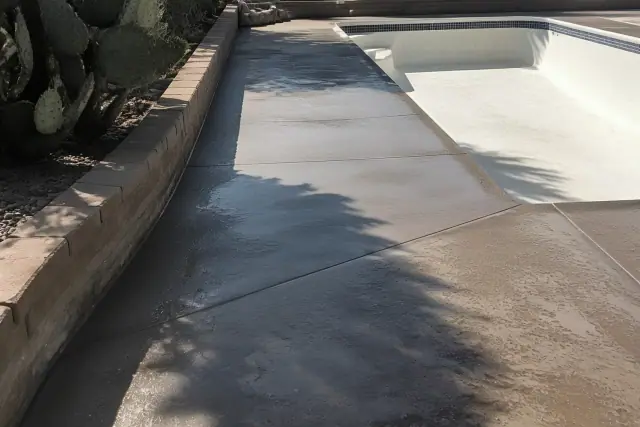
Moisture-wicking concrete pool deck coating being applied in Tucson, AZ, surrounded by prickly pear cacti.

Pool deck coatings use UV-stable topcoats and broadcast texture for surfaces exposed to wet feet, chlorinated water, and salt-cell byproducts. The system is chosen to balance outdoor stability, cleanability, and slip resistance around pools in Tucson and communities such as Oro Valley and Vail.

Request Estimate

Garage Floor Epoxy

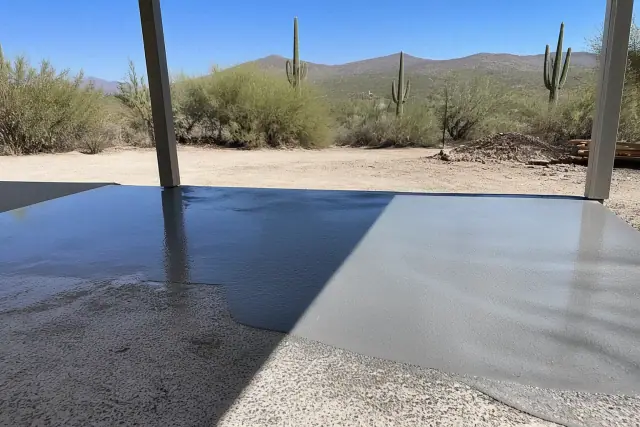
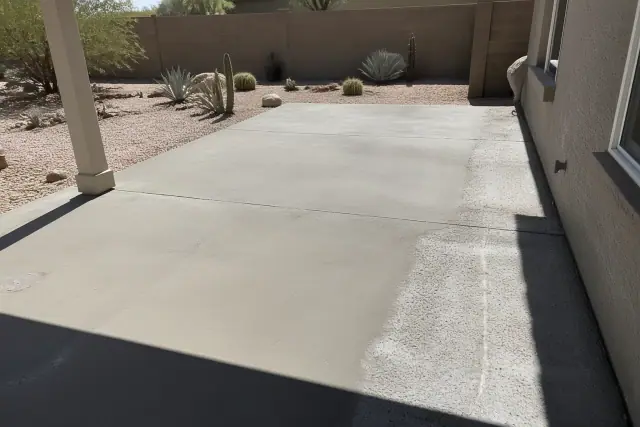
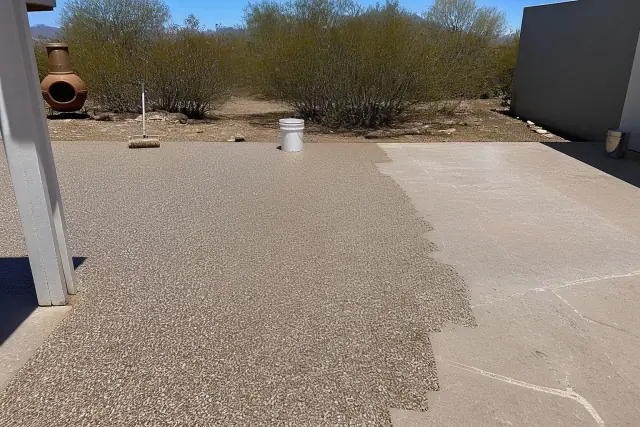
Epoxy coating application on a residential backyard concrete patio in Tucson, AZ, with desert landscape in the background.

Garage floor epoxy creates a hard-wearing base that resists oils and routine chemical exposure. Preparation may include grinding away existing sealers, oil staining, and hot-tire pickup marks before a multi-coat system is installed.

Request Estimate

Concrete Repair & Resurfacing

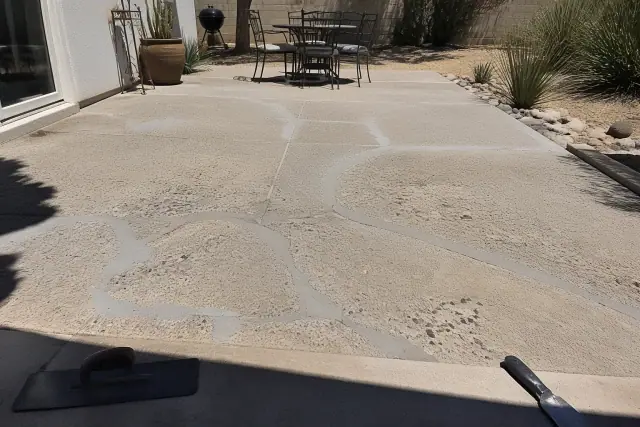
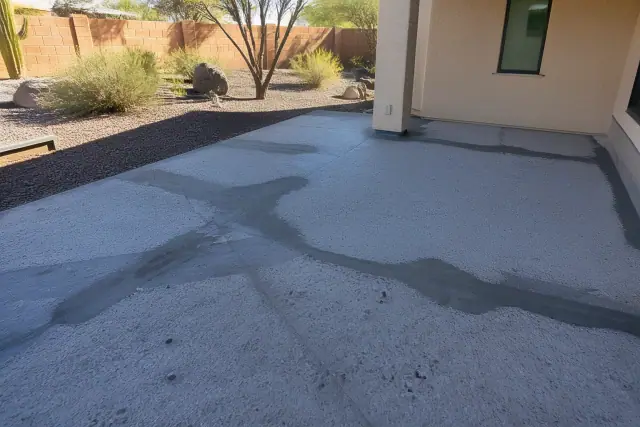
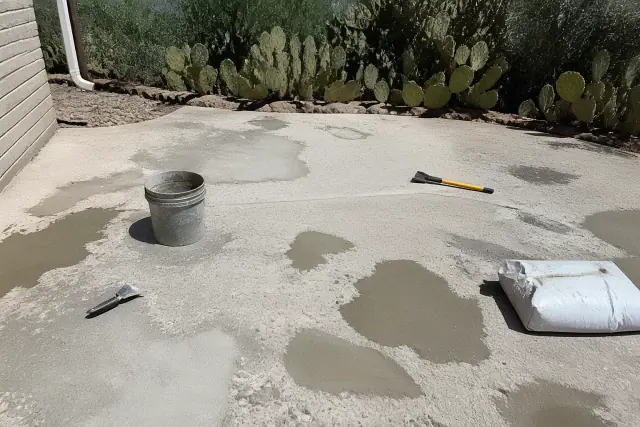
Concrete patio surface showing repair work and patching compound at a backyard in Tucson, AZ.

Cracks can be routed and filled with semi-rigid polyurethane or epoxy filler, while spalled areas are ground back to sound concrete. Older Midtown slabs with significant pitting or deterioration may need a cementitious resurfacing layer before the coating system can be applied.

Request Estimate

Commercial Epoxy Flooring

Concrete backyard patio undergoing structural repair and surface leveling in Tucson, AZ.

Restaurants, retail floors, offices, and showrooms need systems scoped for heavier foot traffic, cleaning routines, and possible chemical exposure. Finish options can include solid colors, flake blends, branded color schemes, logo inlays, and safety-zone striping.

Request Estimate

Industrial Epoxy Flooring

Concrete patio undergoing surface leveling for epoxy flooring in a Tucson, AZ backyard with xeriscape landscaping.

Warehouse and manufacturing floors are evaluated for forklift traffic, oils, solvents, wash-down demands, and wet or greasy areas. Reinforced base coats, higher film builds, chemical-resistant formulations, and appropriate slip texture are selected around those operating conditions.

Request Estimate
Coating System Options

Types of Patio Coating Systems

Coating chemistry and finish format affect UV stability, cure speed, texture, appearance, and how the surface handles daily use. We match the system to direct-sun exposure, slab condition, traffic, and design goals instead of treating every patio alike.

Concrete patio surface undergoing structural repair and leveling in a xeriscaped backyard in Tucson, AZ.

Epoxy Base with UV-Stable Topcoat

A two-component epoxy base provides a hard, chemically resistant layer, typically applied at 10-20 mils dry film thickness. Outdoors, it is protected with an aliphatic polyaspartic or polyurethane topcoat because aromatic epoxy left exposed can amber in Tucson sun.

  • Hard-wearing epoxy workhorse layer
  • Resistance to oils and routine chemical exposure
  • UV-stable finish coat for outdoor exposure
  • Compatible with solid, flake, or metallic designs
  • Applied over mechanically profiled concrete
Request Estimate
Concrete patio floor undergoing structural repair and surface leveling in a Tucson, AZ backyard with desert landscaping.

Polyaspartic Coating Systems

Polyaspartic coatings cure in hours rather than days, resist UV yellowing natively, and tolerate Tucson's low humidity and application-time temperature swings. Those traits make polyaspartic a frequent topcoat choice for patios and pool decks.

  • Native resistance to UV yellowing
  • Rapid cure for shorter project downtime
  • Suitable for patios and pool surrounds
  • Clear protection over color and flake layers
  • Performs across Tucson application conditions
Request Estimate
Concrete backyard patio undergoing decorative flake coating repair in Tucson, AZ.

Decorative Flake Systems

Colored vinyl chips are broadcast into the wet base coat and sealed under a clear topcoat. The result adds texture, helps conceal minor surface imperfections, and gives full-coverage patios and pool surrounds a decorative finish.

  • Colored vinyl chip broadcast
  • Texture for wet-use areas
  • Multi-color blend options
  • Coverage for minor visual imperfections
  • Clear protective topcoat
Request Estimate
Contractor prepping a concrete patio slab for repairs and floor coating in a Tucson, AZ backyard.

Metallic Epoxy Finishes

Metallic floors suspend mica pigments in clear resin, then use controlled air movement to form marbled, three-dimensional patterns. This reflective finish suits covered patios and design-focused outdoor living spaces such as those in the Catalina Foothills and Dove Mountain.

  • Mica pigments suspended in clear resin
  • Marbled, dimensional movement
  • Reflective decorative appearance
  • Custom pattern variation
  • Best considered with patio sun exposure
Request Estimate
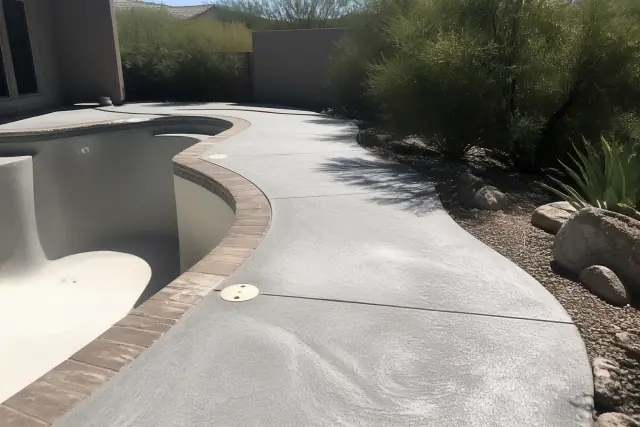
Drained swimming pool deck with textured concrete prepared for sealant in a desert landscape in Tucson, AZ.

Slip-Resistant Pool Deck Finishes

Pool decks and patios that regularly see wet feet need purposeful texture in the final coat. Anti-slip additives can be broadcast into a UV-stable finish while the seamless coating helps keep chlorinated water, dissolved minerals, and salt byproducts from soaking into the slab.

  • Broadcast texture for wet-foot traction
  • UV-stable finish for direct sun
  • Seamless barrier against pool water
  • Decorative flake or solid-color options
  • Mechanical profile beneath every layer
Request Estimate
Finding Your Right Fit

Match the Coating to Your Patio

A successful recommendation starts below the finish. We evaluate moisture, adhesion, cracking, settlement, sun exposure, traffic, and wet-use conditions before choosing the preparation method, resin chemistry, decorative layer, and final texture.

Slab Testing Before Coating

Moisture vapor emission and pull adhesion checks help reveal whether the concrete can support the proposed coating. We use methods consistent with ASTM standards before the primer goes down rather than guessing about the substrate.

Mechanical Surface Profiling

Diamond grinding or shot-blasting removes laitance, old sealers, and contamination while opening the concrete pores. This creates the mechanical profile the primer needs and follows International Concrete Repair Institute surface-preparation guidance more closely than acid etching.

Outdoor Resin Selection

Direct sun, shade, water exposure, and turnaround goals all affect resin selection. Epoxy may supply the durable base, while an aliphatic polyaspartic or polyurethane topcoat supplies the outdoor UV stability that standard aromatic epoxy lacks.

What Sets Us Apart

Why Preparation Defines Coating Performance

Many coating failures begin when moisture, weak concrete, contamination, or existing damage is covered instead of corrected. Our assessment separates cosmetic wear from conditions that need crack repair, grinding, or resurfacing so the written quote reflects the work beneath the finish.

Request a Patio Assessment

UV Yellowing and Chalking

Aromatic epoxy used alone outdoors can amber within a single Tucson summer. UV exposure also contributes to chalking and color fade, so uncovered surfaces need an aliphatic polyaspartic or polyurethane finish selected for direct sun.

Moisture Vapor and Efflorescence

Monsoon runoff can carry dissolved minerals into porous concrete, while moisture moving up through the slab can undermine adhesion and trigger efflorescence. Moisture testing and a compatible primer help determine whether the surface is ready to coat.

Pitting and Surface Spalling

Daily temperature changes of 30-40 degrees can add stress to unprotected patio concrete, accelerating surface wear and hairline damage. Spalled material must be ground back to sound concrete, and deeper deterioration may call for resurfacing before coating.

Active Cracks and Control Joints

Hairline cracks, larger breaks, and movement at old control joints need different treatment. We identify active cracking, route repairable cracks, and use semi-rigid polyurethane or epoxy filler where appropriate instead of expecting the finish coat to hide structural movement.

Old Sealers and Contamination

Old sealers, laitance, oils, and other contaminants can block a primer from bonding to the concrete. Mechanical grinding or shot-blasting, followed by vacuuming and degreasing, removes those bond breakers before the coating layers begin.

Slab Settlement and Weak Concrete

A coating cannot correct settlement or restore concrete that is no longer sound. Slabs poured decades ago without modern reinforcement, or surfaces with large cracks and deep deterioration, may need repair or a new resurfacing layer before a resin system is considered.

How It Works

Our Patio Floor Coating Process

From a courtyard patio in Barrio Viejo to a large pool deck in Vail, the sequence starts with the substrate and builds upward. Testing, repairs, mechanical profiling, controlled coating layers, and cure time each protect the bond and finish.

01.

On-Site Slab Assessment

We examine spalling depth, cracking, slab settlement, existing coatings, sun exposure, traffic, and wet-use conditions. This determines whether the project needs coating alone, localized repair, or broader resurfacing.

02.

Moisture and Adhesion Testing

Moisture vapor emission and pull adhesion checks, using methods consistent with ASTM standards, help confirm the slab and proposed system are compatible. Findings guide primer and repair decisions before material is applied.

03.

Crack Repair and Resurfacing

Cracks are routed and filled where appropriate, and spalled sections are removed to sound concrete. A cementitious resurfacing layer is added when surface deterioration is too extensive for a coating-only approach.

04.

Diamond Grinding or Shot-Blasting

The full surface is mechanically profiled to remove sealer, laitance, and contamination and expose open concrete pores. We then vacuum and degrease the slab so residue does not interfere with the primer.

05.

Primer and Build Coats

A penetrating epoxy primer bonds into the profiled concrete and typically sets within 4-8 hours, depending on humidity and slab temperature. The base color and selected flake or metallic accents follow at controlled film thicknesses.

06.

Topcoat, Texture, and Cure

The UV-stable topcoat seals the system, with anti-slip additive broadcast where wet feet are expected. Under suitable conditions, a straightforward polyaspartic patio can be completed in one working day; crack repair or resurfacing may add a day or two.

Start with the Slab

Plan Your Patio Coating Project

Request an on-site assessment to measure the patio, review the concrete condition, and compare coating and finish options. Tucson Epoxy Co. provides a written quote that identifies the preparation, repair, system, and design choices affecting the final price.

Patio Coating Help

Patio Floor Coating FAQs

Compare costs, coating choices, preparation requirements, cure times, and maintenance considerations before planning a Tucson patio project. The answers below reflect the systems and process described for this service.

Call Our Coating Team

The 2025 regional pricing cited for professional patio coatings is $5 to $12 per square foot installed. At that range, a 1,000-square-foot project is about $5,000 to $12,000, while a typical 200-300-square-foot patio often falls around $1,000-$3,000 depending on slab condition, repairs, and finish complexity.

At the cited $5-$12-per-square-foot range, a 210-square-foot outdoor patio typically costs $1,050-$2,520 installed. Existing slab condition, decorative flake or metallic elements, and the amount of surface preparation determine where the project lands within that range.

Standard epoxy can amber or chalk under direct UV exposure, and a smooth finish can become slippery when wet. Outdoor Tucson systems address those concerns by using a UV-stable polyaspartic topcoat, adding broadcast texture where needed, and mechanically profiling the concrete before installation.

For an exposed Tucson patio, an epoxy base with a UV-stable polyaspartic topcoat is often the recommended combination. Flake systems add texture and conceal minor visual imperfections, while metallic epoxy is better suited to covered, design-focused spaces; the final choice depends on the slab, sun, traffic, and desired finish.

A 20x20 garage is 400 square feet, and the cited $5-$12-per-square-foot installed range puts a comparable multi-coat system at about $2,000-$4,800. Oil staining, hot-tire pickup marks, old sealers, and other preparation needs can affect the quote.

With proper preparation and a UV-stable topcoat, patio coatings in Tucson commonly last 10 to 20 years before recoating, depending on system choice, direct-sun exposure, and foot traffic. An uncovered patio in full desert sun generally wears faster than a covered or shaded courtyard.

Polyaspartic topcoats may allow light foot traffic in as little as 6-8 hours and reach full cure within 24-72 hours. Traditional epoxy systems often need about 24 hours before walking and up to a week before heavy furniture or grills return, although actual timing depends on the installed system and conditions.

A straightforward patio without major repairs may go from grinding to finished polyaspartic topcoat in one working day under suitable temperature and humidity conditions. Cracks, spalling, or resurfacing can extend the project because those repairs must be completed before the coating layers.

Yes, repairable cracks should be addressed before the finish system is installed. The process may include routing and filling with semi-rigid polyurethane or epoxy crack filler, while active structural movement or settlement requires a broader evaluation because a coating cannot correct it.

The slab is diamond-ground or shot-blasted to remove old sealer, laitance, and contamination and create a mechanical profile. After vacuuming and degreasing, moisture and adhesion findings, repairs, and slab condition guide the primer and coating build.

A smooth resin finish can be slippery when wet. For patios and pool decks where wet feet are expected, anti-slip additives or decorative flake can be broadcast into the final system to create more texture.

Yes, when the slab is structurally sound but has more than cosmetic wear, spalled areas can be removed and a cementitious resurfacing layer installed before the resin system. Significant settlement, large active cracks, or weak concrete must be evaluated separately because a finish layer cannot repair structural problems.

Patio floor coating service is available throughout Tucson, Oro Valley, Marana, Sahuarita, Vail, and the greater Pima County area. The project scope still depends on the slab condition, surface use, and coating system selected.