Proudly serving Tucson, Oro Valley, Marana, Vail, Sahuarita, Green Valley & surrounding areasCall or Text 24/7: +1 (520) 567-9887

Garage Floor Epoxy and Concrete Resurfacing Services in Sahuarita, AZ

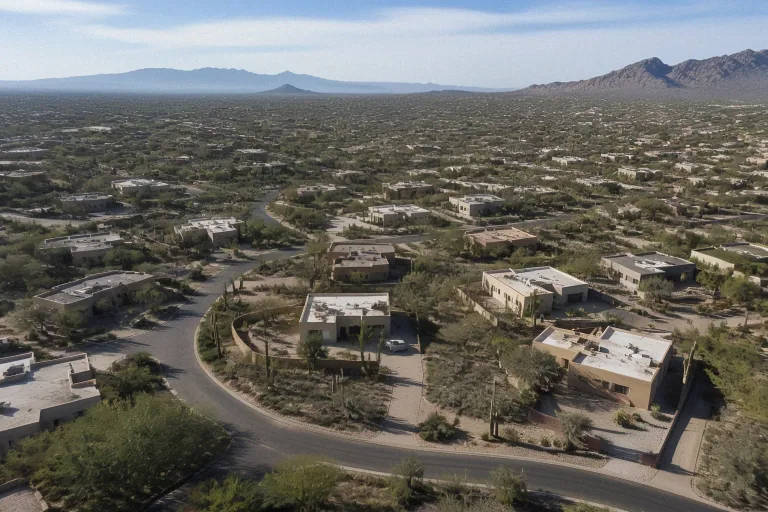
Tucson Epoxy Co. installs garage floor epoxy and concrete coating systems for homes and businesses across Sahuarita, Arizona. Our work includes polyaspartic, commercial and industrial epoxy, flake and metallic finishes, patio and pool deck coatings, and concrete repair. We evaluate the slab itself, from concrete poured in the 1990s to newer subdivision floors, before matching the coating system to the space. Every quote is based on the actual square footage and condition of the concrete.

Caliche-heavy soil, monsoon moisture, and summer heat that regularly tops 105 degrees can contribute to cracking, pitting, vapor issues, and hot tire pickup. We test every slab for moisture and use mechanical diamond grinding instead of relying on acid etching. Cracks, spalls, and uneven areas are repaired before the base coat is applied. That preparation helps the finished floor resist peeling, chemicals, abrasion, and intense UV exposure.

We serve Rancho Sahuarita, Quail Creek, Madera Highlands, Sahuarita Estates, Del Lago, and properties along Sahuarita Road and Duval Mine Road. Ask for a free on-site evaluation and a written quote matched to your floor.

★ ★ ★ ★ ★4.9/5 Average Rating - 20+ Years of Experience - Sahuarita Epoxy Flooring Contractor Specialists - Residential & Commercial
Floor Coating Services

Epoxy and Concrete Coating Options in Sahuarita, AZ

From residential garages and patios to commercial and industrial floors, each system is selected for the slab condition, traffic, sun exposure, finish, and budget. Our nearby coverage also includes Green Valley, AZ , where the same moisture testing and surface-preparation standards guide every installation.

Garage Floor Epoxy

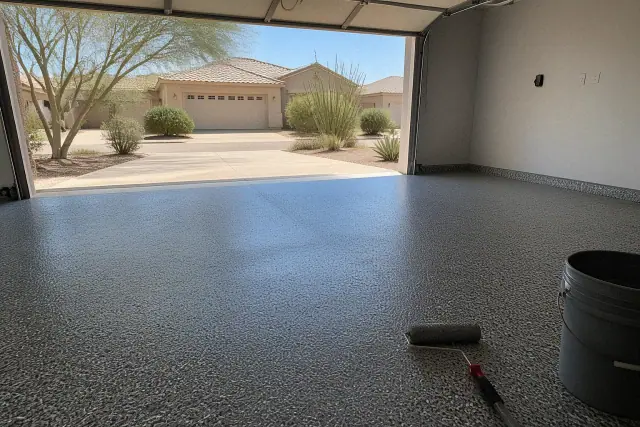
Concrete garage floor with a multi-colored flake base coat during installation at a home in Sahuarita, AZ.

Garage installations pair diamond grinding and moisture assessment with crack repair and a two-component 100% solids epoxy base. Quotes use measured square footage rather than a flat one-car or three-car price, and most systems add broadcast flake plus a clear urethane or polyaspartic topcoat.

Explore Service

Concrete Floor Coatings

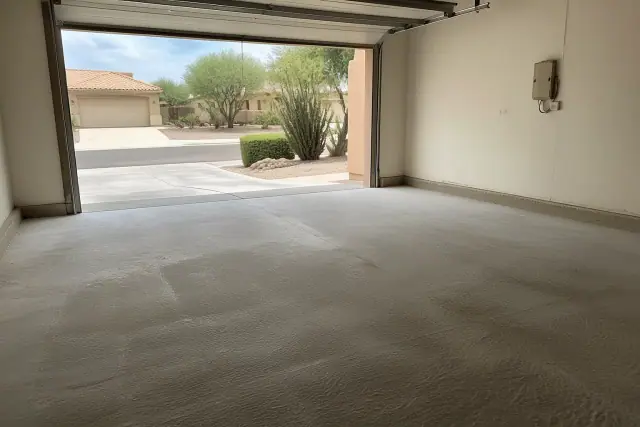
Empty two-car garage with prepped concrete floors ready for epoxy coating in Sahuarita, AZ.

Protective concrete floor coatings suit workshops, utility spaces, and other floors that need stain resistance without a decorative metallic or flake finish. The sealed surface helps keep oil, coolant, and de-icing residue from soaking into porous concrete.

Explore Service

Polyaspartic Floor Coatings

An empty residential garage in Sahuarita, AZ with prepped concrete floors ready for polyaspartic flake coating.

Polyaspartic coatings cure in hours instead of days and resist UV yellowing and hot tire pickup better than standard epoxy. Installed pricing typically runs $5 to $7 per square foot, compared with $3 to $5 for standard epoxy, so the upgrade is most useful where faster return to service and sun stability matter.

Explore Service

Commercial Epoxy Flooring

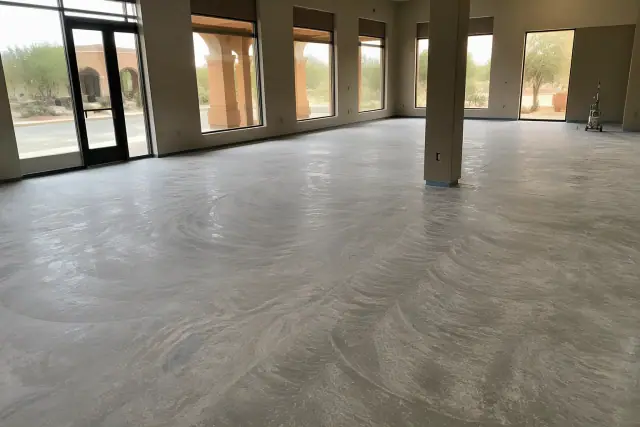
Sanded concrete floor prepared for epoxy installation in a commercial showroom in Sahuarita, AZ.

Commercial systems are designed around rolling loads, foot traffic, chemical exposure, and operating schedules. Fast-cure polyaspartic and epoxy hybrid options can return a space to service sooner than standard epoxy alone instead of forcing a week-long shutdown.

Industrial Epoxy Flooring

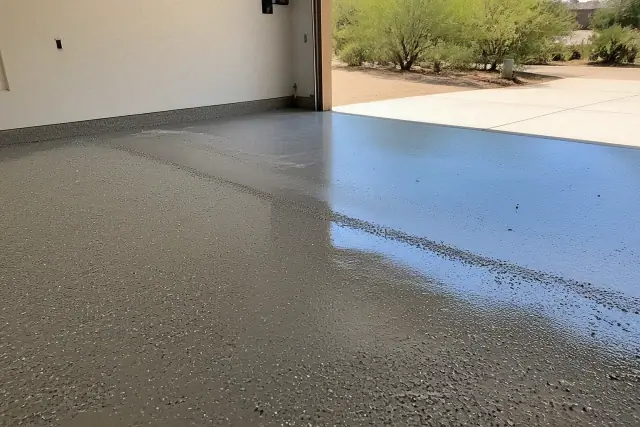
Industrial epoxy flooring with decorative flakes being applied to a residential garage floor in Sahuarita, AZ.

High-build industrial epoxy uses silica quartz or aluminum oxide additives to improve slip and abrasion resistance under forklift traffic and chemical spills. These systems often run 20-30 mils thick versus 10-12 mils for a garage because industrial loads can wear a residential coating down within a year.

Flake Epoxy Flooring

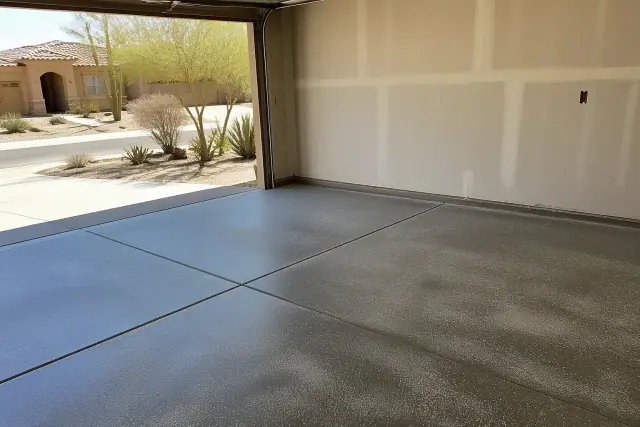
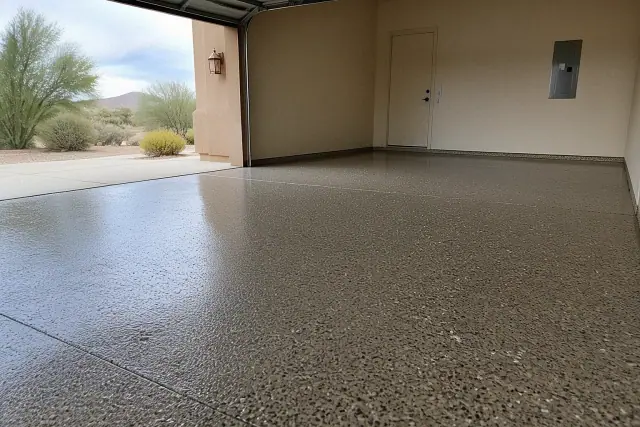
Two-car garage floor in Sahuarita, AZ with a partially applied epoxy flake finish.

A multicolor chip broadcast adds visual texture to a wet epoxy base before a clear topcoat seals the surface. With dozens of color blends available, flake systems help disguise minor imperfections and tire marks while giving garages and patios a practical decorative finish.

Metallic Epoxy Flooring

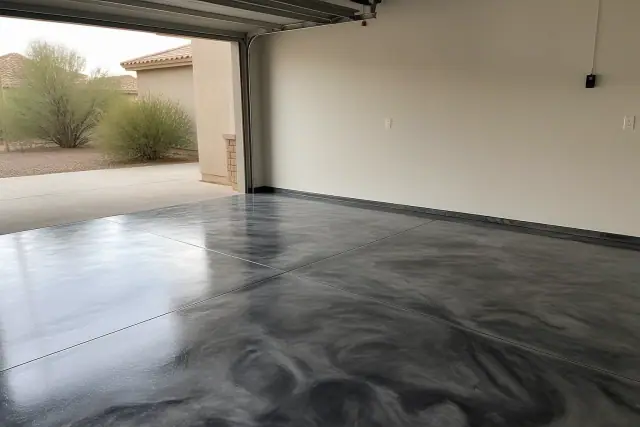
Metallic epoxy flooring with a glossy swirl finish in a two-car residential garage in Sahuarita, AZ.

Mica pigments are manipulated through clear or tinted epoxy to create depth and a marbled, three-dimensional appearance. No two metallic floors look identical, making the finish suited to custom garages, showrooms, and statement patios.

Patio Floor Coatings

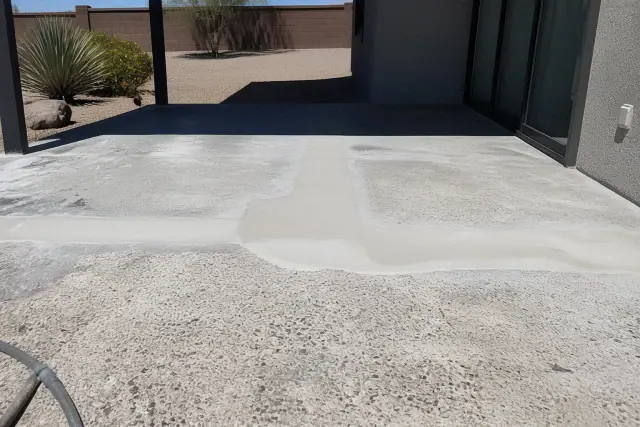
Concrete patio surface being repaired and prepped for epoxy coating in a backyard in Sahuarita, AZ.

Outdoor patios need UV-stable topcoats because interior-grade epoxy can yellow and chalk within a season or two in Sahuarita sun. A polyaspartic finish adds durability and slip texture while protecting the concrete beneath an outdoor living area.

Pool Deck Coatings

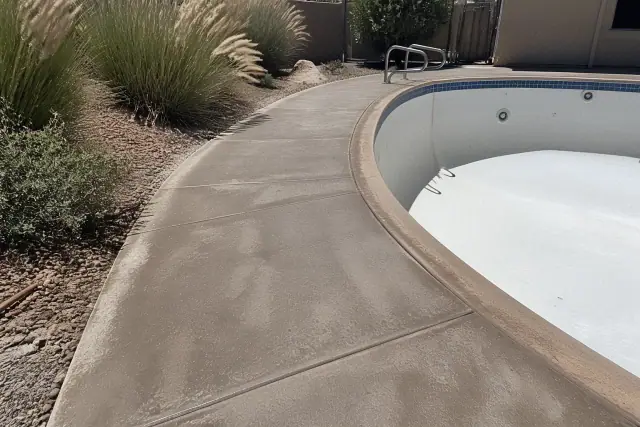
Concrete pool deck ready for a slip-resistant sealant at an outdoor pool in Sahuarita, AZ.

Textured, slip-rated epoxy and polyaspartic systems help manage wet-foot traffic around pool edges. The coating also resists chlorine and pool-chemical splashes and stays cooler underfoot than bare concrete or pavers during summer months.

Concrete Repair & Resurfacing

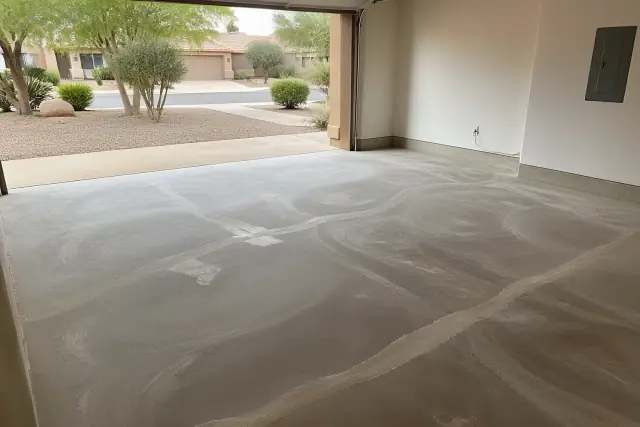
Concrete floor in a Sahuarita, AZ residential garage prepared with crack-fill patches and grinding for an epoxy finish.

Cracks are chased and filled with semi-rigid polyurea or epoxy filler, while spalled, pitted, or uneven areas are resurfaced before coating. Repairing the defect or moisture path first avoids covering a slab problem that would undermine the new finish.

System Selection

How to Choose the Right Floor Coating in Sahuarita

Sahuarita's population has grown past 35,000, creating a mix of production-built garages, custom homes, and small commercial buildings with different concrete needs. The right system depends on what the slab reveals during evaluation, how the space is used, and the balance among appearance, downtime, durability, and budget.

Slab Moisture Testing

Moisture vapor emission, existing sealers, cracks, spalls, and earlier repairs all affect adhesion. Testing first shows whether the slab needs moisture mitigation or repair before any epoxy is mixed.

Traffic and Load Demands

A residential garage, working shop, commercial room, and forklift aisle place very different demands on a floor. System thickness, broadcast media, and topcoat are selected for rolling loads, abrasion, chemicals, and foot traffic rather than appearance alone.

Heat and UV Exposure

West-facing garage doors, patios, and pool decks need stronger UV stability than shaded interior floors. Polyaspartic topcoats are often the better fit when sun, high slab temperatures, and hot vehicles are regular conditions.

Finish and Slip Texture

Solid colors keep the look simple, flake blends help hide tire marks and minor imperfections, and metallic pigments create a custom marbled finish. Patios and pool decks also need a slip-rated texture appropriate for wet feet.

Cure Time and Downtime

Standard epoxy needs a longer cure window, while fast-cure polyaspartic and hybrid systems can reduce downtime. The operating schedule for a business or the parking needs of a household should be part of the system choice from the start.

Budget and Service Life

Residential garage systems run roughly $3 to $7 per square foot depending on preparation, finish, and topcoat. Poorly prepared or DIY coatings often need recoating within 2-3 years, while a professionally installed residential system can last 10-20 years and up to 30 years with proper maintenance.

Sahuarita Slab Issues

Common Concrete Coating Problems for Local Properties

Caliche soil, monsoon moisture, triple-digit heat, and intense UV exposure create distinct risks for garage slabs, patios, and pool decks. Exposed concrete and asphalt can exceed 140 degrees in summer, so diagnosis and product choice matter before installation begins.

Request Slab Evaluation

Cracks and Slab Movement

Caliche-heavy soil expands and contracts through the summer monsoon cycle, and that movement can show up as cracks and uneven concrete. Cracks need to be chased, filled, and evaluated before a coating bridges the repaired area.

Moisture Vapor Intrusion

Monsoon season, typically June through September, can drive moisture through hairline cracks and unsealed joints. Because caliche does not drain like ordinary soil, moisture may remain against the slab and interfere with adhesion unless it is tested first.

Hot Tire Pickup

Heat softens tire rubber and can transfer plasticizers into a coating after a vehicle parks in a hot garage. A polyaspartic topcoat resists this damage better than straight epoxy on floors that regularly receive hot vehicles.

UV Yellowing and Chalking

Standard interior epoxy can yellow or chalk where a west-facing garage door or outdoor slab receives prolonged sun. UV-stable polyaspartic topcoats are used on exposed areas to better handle Sahuarita's intense sunlight.

Pitting, Spalling, and Dusting

Bare concrete can show visible wear, surface dusting, and staining within a few years. Spalled, pitted, or uneven areas need repair and resurfacing so the coating bonds to a sound, consistent profile.

Oil and Chemical Stains

Untreated concrete can absorb oil, transmission fluid, brake fluid, coolant, fertilizer, and pool chemicals within days. A compatible sealed topcoat keeps spills at the surface for easier cleanup instead of letting them set into the slab.

Why Choose Us

Why Sahuarita Property Owners Choose Tucson Epoxy Co.

Our work begins with the concrete rather than a one-size coating package. Local slab experience, moisture testing, mechanical preparation, general contracting insurance, and a clear written scope help property owners understand what the floor needs and why.

Local Concrete Knowledge

Older slabs near the original town core can need more crack repair, while newer builder-grade concrete still benefits from moisture testing. Experience across Sahuarita, Green Valley, and the Tucson metro area informs the evaluation without assuming every pour behaves the same way.

Moisture Testing and Surface Prep

Crews follow concrete surface-profile practices consistent with ICRI guidelines and use diamond grinding instead of acid etching alone. That preparation is the difference between a coating that can serve for 15 years and one that fails in 18 months.

Clear Written Scope

The quote identifies the preparation, repair, coating layers, finish, and cure schedule for the measured slab. Tucson Epoxy Co. carries general contracting insurance and follows local building-code requirements when structural concrete repair falls under Pima County oversight.

Six-Step Process

Our Epoxy Flooring Installation Process in Sahuarita

Each project follows the slab from evaluation through cure rather than covering defects with a generic coating. The sequence is adjusted for moisture, repairs, finish, traffic, and the selected epoxy, urethane, or polyaspartic layers.

01.

Evaluate and Moisture-Test the Slab

The on-site evaluation checks moisture vapor emission, existing coatings or sealers, cracks, spalling, and past repair work. Measurements and floor use establish the project scope.

02.

Diamond-Grind the Surface

Mechanical grinding removes laitance and existing coating residue while opening the concrete pore structure. This creates a stronger profile for adhesion than acid etching alone.

03.

Repair Cracks and Damaged Concrete

Cracks are chased and filled with semi-rigid polyurea or epoxy filler. Spalled, pitted, or uneven sections are repaired and resurfaced before coating begins.

04.

Apply the Epoxy Base Coat

A two-component 100% solids epoxy base is applied at the thickness appropriate for the property and traffic. Temperature conditions are checked so the product remains within its working and cure range.

05.

Build the Finish and Topcoat

Flake is broadcast or metallic pigment is manipulated when the selected finish calls for it. A polyaspartic or urethane topcoat then adds UV stability, chemical resistance, and the specified slip texture.

06.

Inspect, Cure, and Return to Use

After final inspection, standard epoxy base coats typically need 24 hours before foot traffic and 72 hours before vehicle traffic. Faster polyaspartic topcoats can sometimes return a garage to light use the same day, and the exact timeline is reviewed before work starts.

Practical Outcomes

Coating Outcomes for Sahuarita Homes & Businesses

Case Study 1: Garage protection: A properly prepared epoxy and polyaspartic system seals porous concrete against vehicle fluids, hot tire pickup, rolling tool chests, jack stands, and surface dust while reflecting more light into a workshop or home gym.

Case Study 2: Outdoor durability: UV-stable, slip-textured coatings give patios and pool decks a cleanable surface that resists direct sun, chlorine splashes, and wet-foot traffic better than an interior epoxy finish.

Case Study 3: Heavy-use performance: High-build commercial and industrial systems add abrasion media and coating thickness for rolling loads, forklifts, foot traffic, and chemical exposure while fast-cure options limit operational downtime.

Plan Your Floor

Schedule a Sahuarita
Floor Coating
Evaluation

Request a free on-site evaluation for your garage, patio, pool deck, commercial floor, or industrial space. Tucson Epoxy Co. will measure the slab, explain the preparation and coating options, and provide a written quote based on its actual condition.

Floor Coating Help

Epoxy Flooring FAQs for Sahuarita, AZ

These answers cover pricing, preparation, cure time, system choice, local conditions, service areas, and long-term performance. A slab evaluation is still the best way to match the scope and quote to a specific floor.

Call Our Coating Team

Standard epoxy flooring typically runs $3 to $5 per square foot installed, while premium polyaspartic systems run $5 to $7 per square foot. Slab condition, crack repair, moisture mitigation, square footage, and a solid, flake, or metallic finish all affect the written quote.

A typical 2-car garage measures about 400 to 500 square feet and usually costs $2,000 to $4,500 for a standard epoxy system. A premium polyaspartic system on the same footprint can run $4,500 to $7,000 depending on floor condition, preparation, and finish.

Epoxy can be slippery when wet without anti-slip aggregate, and standard epoxy can yellow or chalk under Sahuarita's prolonged UV exposure. Poor preparation, especially acid etching without mechanical grinding or coating over moisture, can also cause peeling and delamination.

Polyaspartic and polycuramine coatings offer stronger UV stability, faster cure times, and higher abrasion resistance than standard epoxy alone. Many systems still use an epoxy base with a polyaspartic topcoat, so the materials often work together rather than serving as complete substitutes.

A 20x20 garage is 400 square feet and often costs $1,800 to $3,500 for a standard epoxy system, depending on slab condition. Crack filling, moisture mitigation, decorative flake, metallic pigment, or a polyaspartic topcoat can raise the total.

Applying a coating over an existing slab generally does not require a permit through Pima County Development Services because it is a surface treatment. Structural concrete repair, slab replacement, or work that changes the slab's structure may fall under local code requirements, so the project scope should be evaluated first.

A professionally installed residential epoxy floor typically lasts 10 to 20 years and can reach up to 30 years with proper maintenance and a quality topcoat. Commercial and industrial floors under heavier use often last 5 to 10 years unless the system is reinforced, while strong UV exposure can shorten the life of an unprotected standard epoxy topcoat.

Diamond grinding removes laitance and old coating residue while opening the concrete pore structure for a consistent mechanical bond. Acid etching alone can leave a weaker profile and contribute to peeling or delamination within the first year or two.

Epoxy base coats typically need 24 hours before foot traffic and 72 hours before vehicle traffic. Polyaspartic topcoats cure faster and can sometimes allow light use the same day, but the exact schedule depends on the selected product and installation conditions.

Hot tires can transfer plasticizers into a coating after a vehicle sits in a heated garage. Proper surface preparation and a polyaspartic topcoat improve resistance to this problem compared with straight epoxy, especially for garages that regularly receive hot vehicles.

Yes, when the outdoor system uses a UV-stable topcoat and the right slip texture for the space. Interior-grade epoxy can yellow or chalk within one or two seasons outside, while pool-deck systems also need resistance to wet-foot traffic, chlorine, and pool-chemical splashes.

Monsoon season typically runs from June through September and can send moisture through hairline cracks or unsealed joints. Caliche beneath the slab drains slowly, so moisture testing helps identify vapor conditions that could weaken coating adhesion.

Flake flooring uses a multicolor chip broadcast that helps hide tire marks and minor surface imperfections, with dozens of blend options available. Metallic epoxy uses manipulated mica pigments for a three-dimensional marbled appearance, and no two finished floors look identical.

Industrial systems often build to 20-30 mils, compared with about 10-12 mils for a residential garage, and may use silica quartz or aluminum oxide for slip and abrasion resistance. That added build is designed for forklifts, chemical spills, and loads that can wear a residential coating down much faster.

Coverage includes Rancho Sahuarita, Quail Creek, Madera Highlands, Sahuarita Estates, Del Lago, Sahuarita Road, and Duval Mine Road. Tucson Epoxy Co. also travels to Green Valley, Tucson, Vail, Corona de Tucson, Sierra Vista corridor properties, and smaller Pima County communities near the Santa Rita Mountains foothills, with farther travel considered for larger commercial or industrial projects.